“Dynamic” Pricing in Restaurants
Should we consider dynamic pricing?
That’s the question a restaurant client asked me during our weekly check-ins last week. That’s the question many in the industry are asking themselves. My answer is: yes, but not across the board and probably not in the way most people define “dynamic”.
Let’s take the biggest element out of the way first: dynamic pricing in the way it has been implemented in e-commerce or in some industries (airlines, hospitality, taxis) is not applicable to restaurants, at least not in the same ubiquitous way. Looking at a menu, with prices on it for each item, is an integral part of the guest experience; it allows the guest to not only decide where to eat, but also what to eat once they’re in the restaurant. Change the price every 15 minutes and you take that ability away from the guest.
The industry is also unique in that selling food addresses one of our core survival needs, which changes the consumer’s choice psychology compared to, say, booking a flight for a vacation; for the same reason, dynamic pricing on groceries is also facing a lot of pushback.
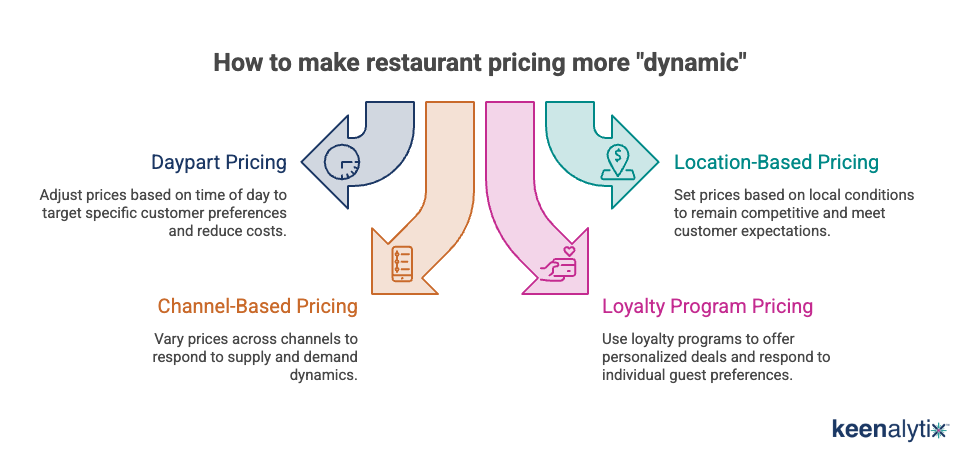
However, this doesn’t mean that restaurant brands are stuck with a single price per item for eternity. Here is how to make your pricing more “dynamic”:
- You may not be able to change prices every 15 minutes, but you certainly can differentiate your prices by daypart, especially on the least “visible” parts of your menu (items with low volume sales). Many brands with locations open late already have different prices for their Overnight daypart; some brands have started pricing their dinner daypart differently from their lunch one. In fact, it’s not just prices: adapting your menu itself to guest preferences by daypart is a great way to drive sales while lowering costs.
- You can also make your prices (and menus) vary across locations. The practice of price tiering, whereby the prices at a specific location are set based on its local conditions, is now table stakes in the industry. As a rule of thumb, any brand with more than 50-100 locations across multiple markets ought to have a price tiering structure in place.
- In the same vein, pricing differently across channels would allow you to better respond to supply and demand dynamics, without going all the way to e-commerce-style dynamic pricing. According to recent industry data from the National Restaurant Association, about 75% of all restaurant traffic is now off-premise (takeout, drive-thru or delivery). Each channel has its own peak hours, best-selling items and customer demographics. Adjusting your menu and your prices by channel is therefore another way to stay closer to the “true” demand than with a one-size-fits-all approach.
- On the more technologically involved end, you can also use your loyalty program and digital sales channel to best respond to changes in demand and guest preferences. In a sense, this approach even goes above and beyond dynamic pricing because it allows you to push personalized offers to individual guests, based on the patterns in their visit history.
In short, the restaurant industry may not be able or ready to implement dynamic pricing algorithms similar to those used in online shopping. However, the techniques described here would likely take any restaurant brand most of the way there, and even beyond it if the brand can push personalized loyalty offers. Most importantly, all these techniques respect the fundamental trade-off between profitability and traffic at play in the restaurant industry.